
Quick Answer:
In 2026, wildfire insurance coverage for commercial assets is no longer a ‘set-and-forget’ policy. Following record losses in 2024 and 2025—including the $1.3 billion Jasper wildfire and the $22.4 billion January 2025 Los Angeles fires—insurers across North America have shifted to a ‘Two-Speed Market’ where high-hazard properties must prove active mitigation, such as professional Structure Protection Units (SPUs), to maintain coverage and avoid the soaring premiums of the high-risk pool.
The commercial property insurance market enters 2026 in a fractured state. While urban “low-hazard” areas are seeing stabilized rates, properties in the Wildland-Urban Interface (WUI) remain “elevated and tightly underwritten.”
We are now living in a Two-Speed Market:
- Low-Hazard Assets: Steady capacity and standard premiums.
- High-Hazard Assets: Drastic premium hikes (averaging 9–12% in Western Canada) and a mandate for active protection.
For properties in the second category, insurers are prioritizing owners who use professional wildfire suppression equipment and maintain documented defensible space.
BC Wildfire Insurance Laws and Western Canada Liabilities (AB & SK)
Western Canada remains the front line of the 2026 insurance shift. Legislative and financial pressures on Canadian commercial operators have reached an all-time high.
1. British Columbia: The Bill 13 Cost-Recovery Shift
The Miscellaneous Statutes Amendment Act, 2025 (Bill 13) has officially amended the BC Wildfire Act. The province has expanded its “cost recovery” powers, allowing for longer investigation periods to pursue commercial owners for firefighting costs if a fire starts or spreads on their land due to negligence or lack of hazard abatement.
2. The “Jasper Effect” on Alberta and Saskatchewan Premiums
Following the $1.3 billion in insured losses from the 2024 Jasper wildfire, insurers have recalibrated.
- The Mitigation Requirement: For properties in high-hazard forest zones, many leading Canadian insurers now make coverage conditional upon a professional wildfire assessment or a verified mitigation plan as part of the underwriting process.
- FireSmart™ BC Mandates: Proving “Zone Zero” compliance is now the primary lever for negotiating commercial renewals.
2026 California Wildfire Laws: A Blueprint for US Commercial Resilience
While SPIEDR’s roots are in the Canadian Rockies, our “BC Model” of protection serves partners across the Western US who are navigating a massive wave of new 2026 insurance laws. If you are operating in the Western US, these laws are critical for your 2026 strategy:
- SB 547 (The Business Insurance Protection Act): This law extends the one-year non-renewal moratorium to commercial property policies, protecting businesses and HOAs in disaster-declared areas from being dropped by their insurers.
- AB 888 (The California Safe Homes Act): Establishes the first-of-its-kind grant program to fund “Zone Zero” mitigation and home hardening, directly addressing the physical insurability of properties in high-hazard zones.
- SB 429 (The California Wildfire Public Model Act): Authorizes the creation of a public, transparent wildfire catastrophe model to replace proprietary “black box” algorithms used for rate setting.
- AB 1680 (The Make It FAIR Act): A comprehensive overhaul of the California FAIR Plan, mandating stricter claims-handling timelines and expanding coverage options for those in the insurer of last resort.
Wildfire Mitigation Strategies to Lower Commercial Premiums
In the 2026 “hard market,” documented mitigation is the only way to secure a better rate or avoid non-renewal.
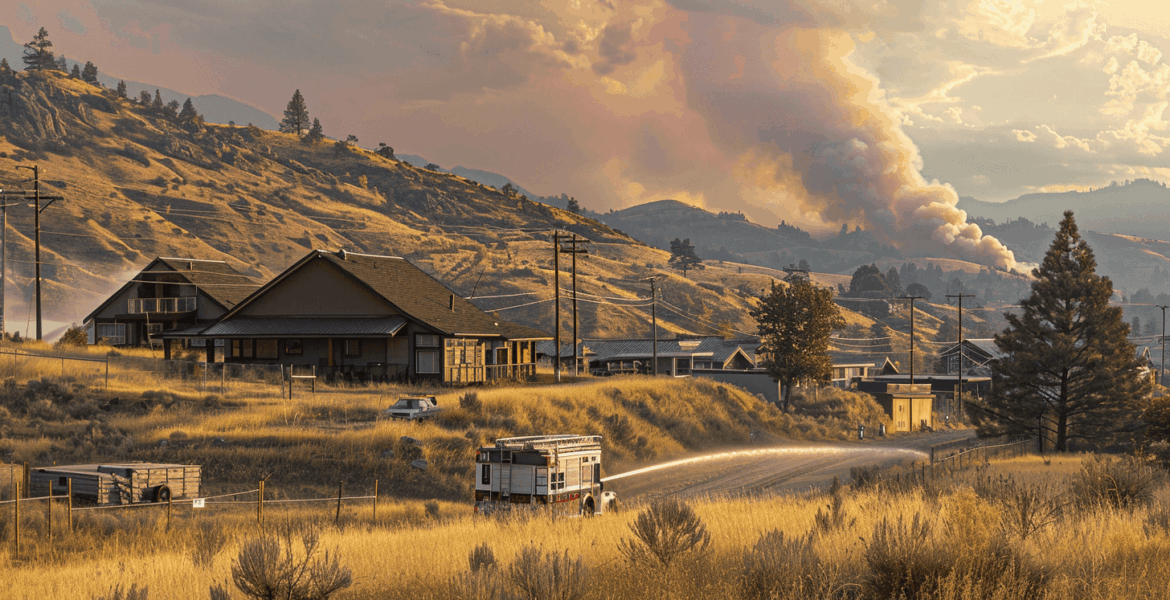
- Deploy Mobile Suppression Systems: Investing in or leasing a Structure Protection Unit (SPU) trailer allows you to create a “Wet-Wall” that protects assets during the passing fire front.
- Audit Your “Zone Zero”: Clear all combustibles within 1.5 metres (5 feet) of structures. In 2026, this is the most scrutinized metric during an insurance inspection.
- Document Everything: Use a wildfire protection specialist to create a Resilience Report for your broker. This evidence is often the difference between a standard premium and a high-risk “surplus lines” rate.
What is a Structure Protection Unit (SPU) trailer?
An SPU is a mobile wildfire suppression system equipped with pumps and high-capacity sprinklers. It is designed to create a "Wet-Wall" defense, which insurers prioritize as it significantly reduces the probability of a total loss.
What is Zone Zero in wildfire defense?
Zone Zero, also called the Immediate Red Zone, is the 0–5 foot area surrounding a structure. To meet 2026 insurance requirements, this zone must be entirely free of combustible materials like vegetation, wood mulch, and debris. Maintaining a non-combustible Zone Zero is the most effective way to prevent structure ignition from wind-blown embers.
How can I reduce commercial insurance costs related to wildfires?
Focus on "active mitigation" to move your property into more competitive pricing tiers. Insurers in 2026 offer lower premiums for properties with professional sprinkler systems (SPUs), verified defensible space, and non-combustible building materials. Providing an independent wildfire risk assessment can often help secure lower rates by proving the property is a "protected risk."
Can my commercial insurance be canceled after a wildfire?
In BC and the Prairies, insurers can non-renew if risk exceeds their appetite. However, California's SB 547 now provides a one-year non-renewal moratorium in disaster areas. Specifics vary with location, but mitigation remains the best defense against non-renewal globally.
What are the new liabilities under BC’s Bill 13?
Bill 13 (2025/2026) allows the BC Government to recover fire suppression costs from property owners. If a fire spreads due to poor hazard management on your land, you may be liable for the government's full firefighting expenses.

