

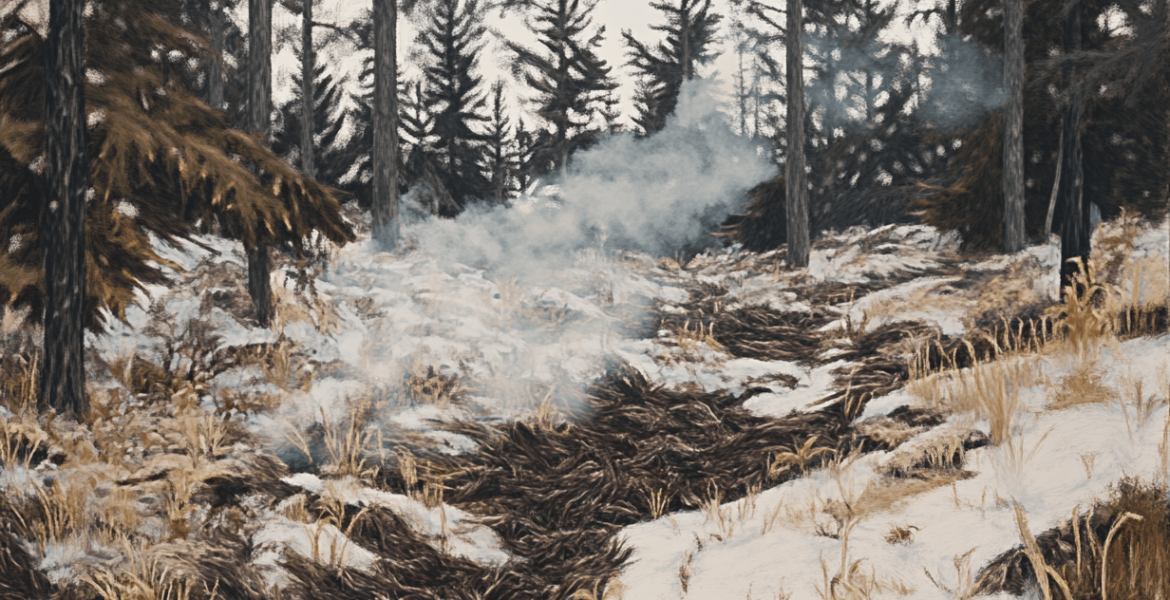
Wildfires don’t wait for summer. In British Columbia, dry conditions, dormant vegetation, and strong winds can make winter just as dangerous for fire starts. At SPIEDR, we’ve seen firsthand that year-round preparedness is key to protecting homes, farms, and industrial properties. Winter offers the perfect opportunity to strengthen your wildfire defences while the risk is low so you’re ready when it rises again.
Understanding Winter Wildfire Risks
Even during cold months, fire danger doesn’t disappear. Periods of limited precipitation, frozen ground, and accumulated dry fuels can all contribute to ignition potential. Grass and brush may still burn when humidity is low and winds are high. Many winter wildfires start from human activity improper burning, equipment sparks, or heating systems gone wrong, making awareness and preparation essential. And even more dangerous, and surprising to some, is the existence of zombie fires: fires that keep burning underground throughout the winter, ready to reignite when the weather heats up months later.
Inspect and Maintain Your Equipment
Winter is the best time to service your fire-protection equipment before next season begins. Inspect pumps, hoses, and sprinkler systems to ensure everything is in working condition. Flush out water lines to prevent freezing, lubricate moving parts, and replace any worn components. For trailer-mounted systems, check tire pressure, fuel storage, and electrical systems to guarantee a quick spring deployment. At SPIEDR, we recommend a full off-season inspection for every structure protection trailer or sprinkler kit you operate.
Create and Improve Defensible Space
Snow may cover the ground, but it’s the perfect time to clear dead trees, branches, and overgrown vegetation before spring growth where possible. Create a defensible buffer around your property at least 10 to 30 metres where possible by trimming low branches, removing combustible debris, and spacing out vegetation. This ensures that when conditions dry out again, your structures remain less exposed to fast-moving flames.
Protect Water Sources and Access Points
Cold temperatures can restrict your ability to access water when it’s needed most. Keep hydrants, tanks, and reservoirs free of snow buildup. If you rely on portable water pumps or trailers, store them in a heated area or use antifreeze measures to prevent damage. Mark water access points clearly for emergency crews, as snow and ice can obscure visibility during a crisis.
Winter is ideal for reviewing your wildfire response plan with family, staff, or community members. Update emergency contacts, confirm evacuation routes, and revise your property map with any changes from the previous year. Schedule a pre-season training session to make sure everyone understands equipment use and safety procedures. The more familiar your team is now, the faster they’ll respond when fire season starts.
Work with Professionals for Advanced Protection
Professional assessments can identify vulnerabilities you might overlook. SPIEDR’s wildfire consulting services help property owners design efficient sprinkler systems, improve fuel management, and plan large-scale protection strategies. Investing in professional guidance ensures your site’s systems are engineered for real-world wildfire conditions—not just theory.
Winter wildfire preparedness isn’t just about maintenance, it’s about mindset. Staying proactive through the off-season means fewer surprises when the next fire season begins. Keep monitoring weather patterns, stay informed through BC Wildfire Service updates, and use the quiet months to prepare your property for resilience year-round.
Frequently Asked Questions
Can wildfires really happen in winter?
Yes. Winter wildfires occur when vegetation remains dry, humidity is low, and winds are strong—especially during mild or drought-affected winters. Fires can also remain actively burning underground (known as zombie fires) and reignite when the weather warms up.
What’s the most important off-season step for wildfire preparedness?
Equipment maintenance is crucial. Inspect and repair pumps, hoses, and sprinkler systems to ensure they’re operational before spring.
How can I protect my property from wildfires if I live near forested areas?
Create defensible space, manage fuels, and install a wildfire sprinkler system. Combining these steps offers strong protection against ember attacks and radiant heat.
Why prepare for wildfires in winter instead of spring?
Winter gives you time to identify weak points, clear vegetation, and repair equipment before fire danger rises. It’s about staying ahead of the season—not reacting to it.
Does SPIEDR offer wildfire protection solutions year-round?
Yes. SPIEDR provides consulting, training, and mobile wildfire-protection systems for both residential and industrial clients across British Columbia.

